Wildfires threat
Extended periods of dry, warm and windy weather have created conditions in which wildfires can ignite easily and spread rapidly across grassland, heath, woodland edges, scrub and unmanaged neighbouring land. Even a small ignition can escalate into a fast‑moving fire front within minutes.
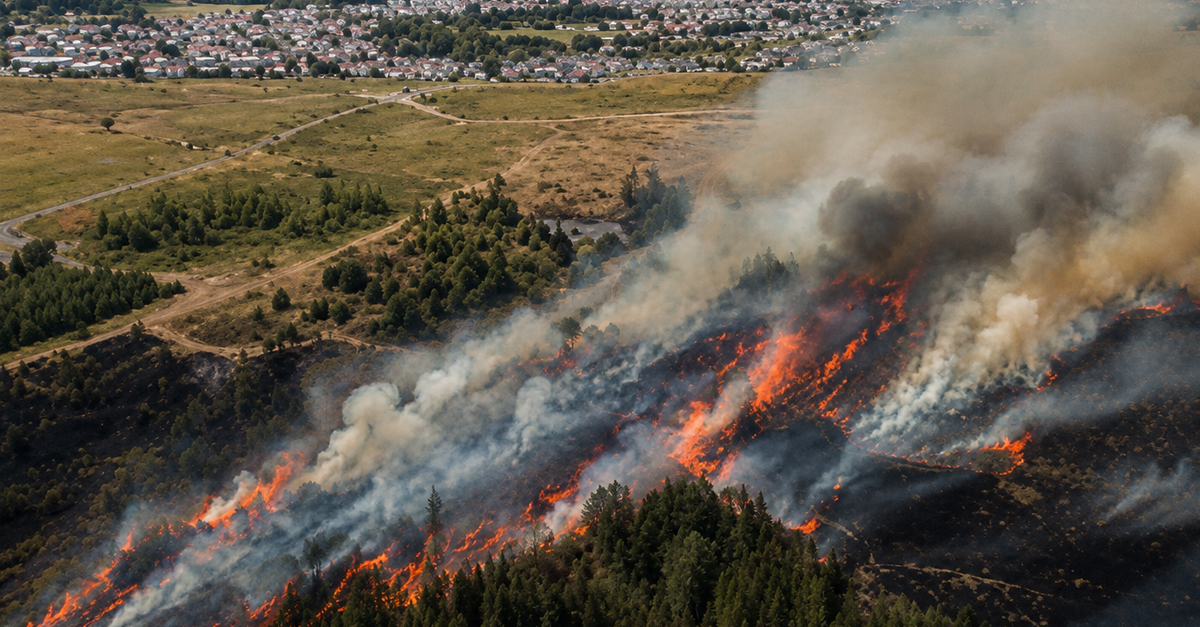
Common ignition sources include BBQs, discarded cigarettes, campfires, machinery sparks and deliberate fire‑setting. These risks increase during warm weekends, peak visitor periods and school holiday periods.
Movement – What Members Need to Know
Wildfire movement is shaped by three interacting factors:
• Fuel load. Dry grass, bracken, gorse, leaf litter and unmanaged woodland edges are highly combustible.
• Weather. Warm, dry, windy periods enable rapid fire growth and long‑range ember travel.
• Topography
o Upslope runs: 10° slope can double spread rate; 20–30° slopes produce aggressive fire behaviour.
o Valleys/draws: Funnel heat and smoke, creating chimney effects and rapid vertical runs.
o Wind corridors: Saddles, ridgelines and coastal gaps accelerate wind and spotting.
o Aspect: South‑ and west‑facing slopes dry earlier and burn hotter.
Movement Patterns to Expect
Wildfire behaviour can shift rapidly under warm, dry, or windy conditions, creating a dynamic environment that challenges both prediction and response. Estates teams should expect non‑linear fire movement, rapid changes in direction, and the potential for new ignition points well ahead of the main front.
• Spotting – Embers carried ahead of the main fire front ignite new areas, sometimes hundreds of metres away.
• Lateral spread – Wind shifts cause sudden sideways movement, threatening flanks and access routes.
• Smoke impact – Smoke can travel kilometres, affecting air quality, visibility, and campus operations.
Preparation – Controls for Estates Teams
University estates face additional exposure where they adjoin unmanaged land, public‑access areas, or routes used by third parties under local rights, permissive paths or access codes. Effective wildfire resilience relies on three strands: vegetation, people and infrastructure.
• Vegetation management – Cut back grass, remove deadwood, manage bracken, maintain firebreaks, and clear boundaries with neighbouring land (especially unmanaged or public‑access areas).
• Enforce local restrictions on fires and BBQs — this may include PSPOs (England & Wales), local byelaws (all nations), Scottish Outdoor Access Code requirements, or National Park regulations.
• Install clear signage at high‑risk edges, especially where public access routes intersect with university land.
• Monitor green roofs, these can ignite in prolonged dry weather unless vegetation is kept cut back, fire‑breaks remain clear, debris is removed, and irrigation prevents full desiccation.
• Promote awareness campaigns during warm, dry periods.
• Increase patrols or security presence (CCTV, sweeps) where third‑party access is permitted or unavoidable.
Post‑Loss Considerations
For UMAL Members, the real risk driver is disruption, not building destruction. In the UK context, wildfire rarely damages buildings directly, but operational disruption is common. Estates teams should plan for:
• Access restrictions – Fire cordons may block roads, car parks or key teaching buildings.
• Air quality impacts – Smoke ingress affects teaching spaces, labs and accommodation.
• Decant or relocation – Temporary movement of teaching or residential groups if smoke or cordons persist.
• Critical services – Risks to plant rooms, IT hubs or controlled‑environment research.
• Neighbouring land risk – Fires originating on unmanaged land, farmland or public‑access areas may impact campus boundaries.
Quick Actions for Estates Managers
• Check boundary vegetation on high‑risk areas and unmanaged edges.
• Confirm BBQ and other ignition controls for summer periods.
• Review appliance access routes and ensure hydrants remain clear.
• Plan for operational disruption from smoke, cordons and loss of access, including temporary evacuation for air‑quality issues.
• Engage with the local FRS on wildfire patterns and response expectations.
Please see the checklist – URL Link