Engineered Stone
Artificial, engineered, reconstituted, or sintered stone has become increasingly popular in the construction and interior design sectors. The engineered stone is a composite material made by combining quartz with resins, pigments, and other materials. In many cases, these engineered products contain up to 90–95% crystalline silica, making them a significant source of silica dust during fabrication and installation.
Usage
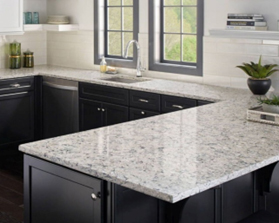
The use of engineered stone has become popular for use in kitchens and bathrooms surfaces and use extends to wall paneling and even decorative cladding for exterior walls. Its ease of use, durability, and aesthetic qualities mean its use may be wider than anticipated. UMAL Members should be aware of new builds, refurbishments and any works / repairs on existing engineering stone, these can potentially expose Members employees, students and contractors to dust containing respirable crystalline silica (RCS).
Health Concerns
Silicosis is a fibrosis of the lungs, an irreversible scarring that results in symptoms including shortness of breath, cough, weight loss, prolonged exposure can lead to serious illness and potentially fatal conditions. The disease has long been associated with exposure to RCS.
Accelerated silicosis is a relatively new disease, it is an aggressive form of pneumoconiosis, and it develops faster than chronic silicosis. Emerging research identifies a direct correlation with accelerated silicosis, and inhalation of extremely high concentrations of RCS associated with the cutting, grinding, or polishing of quartz products and engineered stone.
Media
There has been high profile media coverage on use of engineered stone in Australia, the US and New Zealand, this includes the introduction of bans on imports and use of emergency legislation. The UK response, led by the HSE, has been a rewrite of the existing HSG201 guidance to be more explicit about the duties of the worktop industry. Silica remains classified as a potential human carcinogen, there is a legal requirement to control exposure to it to a level as low as reasonably practicable.
Controls
Sadly, as there is not a cure for Silicosis, so UMAL Members should focus on eliminating or reducing exposures. Members should consider their approach to materials used, always consider what alternatives to high-silica engineering stone are available and suitable for use. If engineered stone is used, the following hierarchy of controls should be considered:
• Where possible materials should be prepared off site (to include final cut to size and surface preparation of any cut outs for sinks, taps, pipe runs etc.)
• Supplying workshops should have suitable enclosed, automated cutting with dust suppression systems / wet cutting and materials must be subject to a deep clean pre-transport.
• For minor modifications or spot repairs (at site), the Member must introduce a safe system of work to cover a dedicated workspace with the use of water suppression or on-tool extraction with a shroud and dust collector attached to an M-class vacuum. All users / handlers must wear suitable respiratory protective equipment with a suitable assigned protection factor (APF).
• Post works the environment / work piece should clean using wet methods – use a low-pressure water hose or an M-class vacuum.
For further support on work with engineered stone, please contact the UMAL Risk Control team.